Table of Contents
Exploring Virtual IOP for Substance Abuse Treatment
Building on traditional IOP, virtual options expand access for those seeking substance abuse recovery. At Echo Ridge Wellness, we offer a virtual iop designed as a remote, structured program delivering 9 or more hours of weekly therapy via secure video conferencing. This approach aligns with Substance Abuse and Mental Health Services Administration (SAMHSA) guidelines on intensive outpatient clinical models, making Virtual IOP Substance Abuse an effective path for many in recovery.
One key advantage of virtual addiction treatment lies in its accessibility, eliminating travel barriers for rural patients or those with mobility challenges. According to comprehensive government-backed protocols from the National Center for Biotechnology Information (NCBI), this format supports integrated care for co-occurring disorders, allowing participants to engage from home while addressing both mental health and substance use needs. We integrate group and individual sessions, typically 3-5 days a week for 2-3 hours each, following standard IOP protocols outlined in SAMHSA’s TIP 47. Evidence-based therapies like cognitive behavioral therapy (CBT) and motivational interviewing are adapted seamlessly for online delivery, fostering skill-building in a supportive environment.
In IOP addiction recovery, outcomes focus on relapse prevention and sustained wellness, with programs often lasting 90 days or more as per federal guidelines. Participants build resilience through community connections and personalized plans. These virtual programs not only promote long-term recovery but also prepare you for ongoing support–explore session details and enrollment next to start your healing today.
Basics of Virtual Intensive Outpatient Programs for Substance Abuse
Building on foundational recovery options, virtual intensive outpatient programs for substance abuse offer a modern approach to treatment that fits into busy lives. At Echo Ridge Wellness, we recognize how important accessible care is for those navigating addiction. A Virtual IOP Substance Abuse program provides structured support without requiring a residential stay, typically involving 9 or more hours of therapy each week. This includes group sessions, individual counseling, and skill-building activities focused on relapse prevention and emotional regulation, as outlined in federal guidelines from the Substance Abuse and Mental Health Services Administration (SAMHSA).
Virtual IOP delivers these essential services through secure online platforms like video conferencing, allowing participants to join from the comfort of home while preserving the intensity of care. We design our programs to mirror the therapeutic depth of traditional options but with the added convenience of digital access. For substance abuse recovery, this means addressing triggers, building coping strategies, and fostering community support–all from anywhere with a stable internet connection. According to peer-reviewed research from the National Center for Biotechnology Information (NCBI), virtual formats maintain outcomes comparable to in-person care, including sustained abstinence and improved quality of life.
One key advantage of virtual addiction treatment lies in its ability to reach individuals in remote areas or those facing mobility challenges, reducing stigma associated with seeking help. It also ensures continuity during disruptions, such as health crises, making it easier for patients to stay engaged without pausing their journey. At our center in Orange County, CA, we extend this personalized virtual care tailored to your needs nationwide, supporting those dealing with co-occurring mental health issues. For instance, when substance abuse overlaps with conditions like anxiety, elements of intensive outpatient programs for mental health can integrate seamlessly to provide holistic support.
The following table highlights the differences between virtual and traditional IOP, emphasizing how online delivery enhances accessibility:
| Aspect | Virtual IOP | Traditional IOP |
|---|---|---|
| Delivery Method | Fully online via secure video platforms | In-person at treatment facilities |
| Accessibility | Available from anywhere with internet | Limited to facility location |
| Scheduling Flexibility | Mornings, evenings, weekends | Standard business hours |
This comparison shows how virtual IOP removes geographical barriers, enabling broader participation in IOP addiction recovery. The flexibility in scheduling, for example, allows individuals to balance work, family, and treatment without sacrificing progress. Research from NCBI indicates no significant differences in key outcomes like confidence in staying sober between virtual and in-person models, underscoring its effectiveness for sustained engagement. By accommodating real-life responsibilities, virtual options help reduce dropout rates and promote long-term recovery, especially for those in underserved communities.
We have seen firsthand how this adaptability empowers participants to maintain momentum in their healing process. For substance abuse patients juggling daily obligations, the option to attend evening sessions from home can make all the difference in building resilience against relapse. NCBI studies further affirm that virtual IOP supports psychological well-being at rates similar to traditional care, with hybrid elements sometimes boosting overall health perceptions.
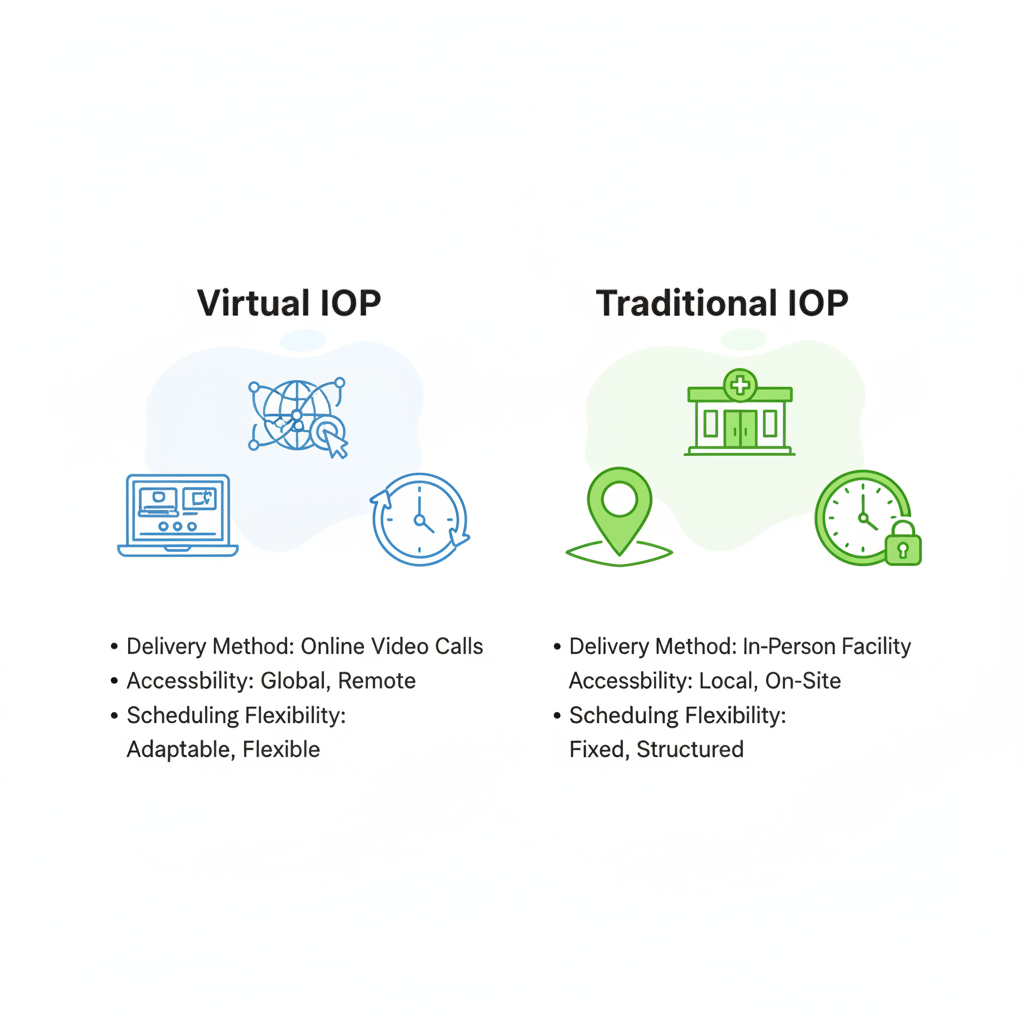
Visual comparison of virtual vs traditional IOP for substance abuse
These basics pave the way for understanding who qualifies and how to enroll in virtual IOP. If you’re ready to start your healing today, our team at Echo Ridge Wellness is here to guide you through compassionate, evidence-based support. Remember, results may vary, and we encourage consulting a healthcare professional for personalized advice.
In-Depth Look at Virtual IOP for Addiction Recovery
Building on the flexible structure of Virtual IOP, our Virtual Intensive Outpatient Program at Echo Ridge Wellness tailors intensive support for addiction recovery. We focus on Virtual IOP Substance Abuse programs that address the unique needs of those facing substance use disorders, offering accessible care from anywhere. This approach empowers individuals to engage in recovery without the barriers of traditional in-person attendance, fostering a supportive path toward lasting wellness.
Addressing Co-Occurring Disorders in Virtual IOP
At Echo Ridge Wellness, we recognize that addiction often intertwines with mental health challenges like depression and anxiety, making integrated care essential in virtual addiction treatment. Our Virtual IOP Substance Abuse programs employ dual-diagnosis models, combining substance abuse counseling with targeted therapy for co-occurring disorders. For instance, patients participate in concurrent video sessions where therapists address both addiction triggers and emotional symptoms, creating a holistic treatment plan.
This integrated approach has shown promising results, with peer-reviewed academic research from the National Institutes of Health demonstrating improved retention rates for patients with mental health comorbidities in telehealth settings. During the COVID-19 pandemic, virtual formats maintained engagement levels comparable to in-person care, helping individuals stay committed despite life’s demands. We prioritize empathetic, personalized strategies to support your journey, ensuring that virtual sessions provide the compassion needed for complex recoveries. By tackling these intertwined issues together, our programs help build resilience and reduce relapse risks.
Evidence-Based Therapies in Substance Abuse Programs
In our online IOP targeting addiction, evidence-based therapies form the cornerstone of effective recovery. Cognitive Behavioral Therapy (CBT) stands out, adapted for virtual delivery through interactive video platforms where we review homework in real-time using shared screens. This method helps patients identify and reframe negative thought patterns related to substance use, maintaining efficacy similar to in-person sessions.
Dialectical Behavior Therapy (DBT) follows suit, teaching emotional regulation and distress tolerance via group and individual virtual meetings. We incorporate motivational interviewing to enhance commitment to change, with features like chat functions allowing immediate feedback. These therapies, delivered up to 9-12 hours weekly, ensure comprehensive support while accommodating busy schedules.
Official federal health agency recommendations from the U.S. Department of Health and Human Services endorse these virtual adaptations for substance use disorders, highlighting their role in behavioral health integration. At Echo Ridge Wellness, we draw on these proven methods to guide participants toward sustainable habits, fostering a sense of community even remotely.
The following table compares key therapies in Virtual IOP Substance Abuse versus standard outpatient programs, illustrating the depth of our virtual offerings:
| Therapy Type | Virtual IOP Coverage | Standard OP Coverage |
|---|---|---|
| CBT for Addiction | Weekly individual sessions | Bi-weekly or less frequent |
| Group Support | 9-12 hours including virtual groups | Fewer hours, in-person only |
| Family Involvement | Integrated virtual family therapy | Optional, less structured |
Virtual formats enable consistent participation by offering flexible scheduling, recorded sessions for review, and mobile access that eliminates travel barriers. This accessibility ensures individuals can engage fully, regardless of location or daily commitments, leading to higher adherence and better outcomes in addiction recovery.
These comparisons highlight how our Virtual IOP Substance Abuse programs enhance therapeutic engagement. For many, the convenience of joining from home reduces dropout risks and supports ongoing progress. We see this flexibility as a key to empowering sustained recovery efforts.
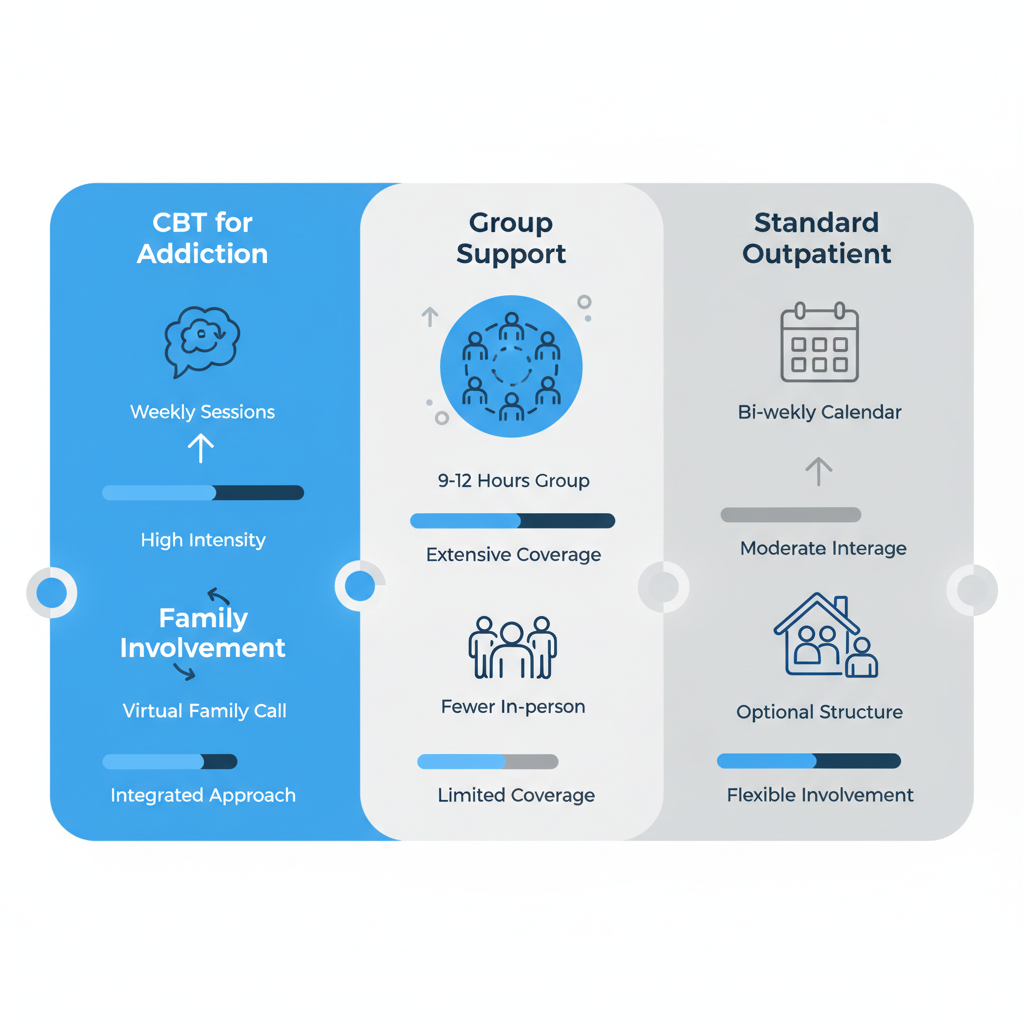
Comparison of therapies in Virtual IOP vs. Standard Outpatient for addiction
Transitioning from these therapeutic foundations, psychiatric support plays a vital role in comprehensive care.
Role of Psychiatric Support in Virtual Treatment
In our IOP addiction recovery process, psychiatric evaluations occur securely via telehealth, ensuring HIPAA-compliant consultations. Board-certified psychiatrists assess needs and prescribe medication-assisted treatment (MAT), such as buprenorphine for opioid use disorder, with follow-up monitoring to adjust as recovery progresses.
This ongoing support integrates seamlessly with therapy, addressing both immediate symptoms and long-term stability. We emphasize personalized plans that align with each individual’s goals, promoting a balanced path to wellness.
These virtual enhancements underscore the program’s potential for sustained recovery, bridging seamlessly to discussions on long-term outcomes and accessibility.
Applying Virtual IOP in Substance Abuse Recovery
Building on the foundations of virtual Intensive Outpatient Programs (IOP), applying Virtual IOP Substance Abuse strategies makes recovery accessible and practical for everyday life. At Echo Ridge Wellness, we understand the challenges of balancing treatment with responsibilities, so our programs emphasize flexibility to support your journey without disruption.
Daily Life Integration and Scheduling in Virtual Programs
Balancing recovery with daily demands can feel overwhelming, but virtual IOP offers tools to make it manageable. For Virtual IOP Substance Abuse, sessions typically total 9-12 hours per week, allowing you to integrate them seamlessly into your routine.
To fit these commitments, start by assessing your schedule. Align evening group calls with work shifts, freeing up mornings for individual therapy if needed. We recommend using calendar apps to block out sessions and build in self-care breaks between modules, ensuring you recharge without burnout.
- Prioritize flexibility: Choose programs like ours at Echo Ridge Wellness with options for mornings, evenings, or weekends to match your lifestyle.
- Incorporate routines: Pair sessions with daily habits, such as post-work therapy followed by journaling, to foster consistency.
- Track progress: Use built-in apps for reminders, helping you adjust as life evolves.
Consider Sarah, a parent in Orange County, who managed virtual IOP alongside childcare by scheduling sessions during nap times. This approach prevented travel disruptions and sustained her motivation, proving sustainable recovery is achievable.
Insurance Navigation for Virtual Addiction Treatment
Once scheduling is managed, securing financial support is key to starting your virtual addiction treatment. Verifying coverage ensures you access benefits without surprises. Begin by contacting your insurer to confirm telehealth benefits for substance use disorder (SUD) treatment, as outlined in U.S. Department of Health and Human Services guidelines. Review policy documents for in-network providers and specific codes for virtual IOP sessions. Next, reach out to treatment centers like Echo Ridge Wellness for a free verification–our team handles paperwork to maximize your coverage.
The following table compares insurance aspects of virtual IOP versus inpatient rehab for substance abuse, highlighting cost and flexibility differences to aid your decision:
| Factor | Virtual IOP | Inpatient Rehab |
|---|---|---|
| Weekly Cost (with Insurance) | Often covered in-network, lower copays | Higher deductibles, facility fees |
| Duration Flexibility | 9-12 hours/week, adjustable | Full-time residential |
| Location Requirement | None, virtual access | On-site stay required |
According to authoritative federal guidelines from the U.S. Department of Health and Human Services on telehealth reimbursement, many payers now cover virtual IOP at rates comparable to in-person care, reducing out-of-pocket expenses. When choosing providers, prioritize accreditation and HIPAA compliance for secure sessions. Check patient reviews on platforms like Google for real experiences, and explore options like an intensive outpatient program near me through centers like Echo Ridge Wellness in Orange County, CA. Verify medication management inclusion to support comprehensive care–our flexible plans often qualify for full benefits.
Building Support Networks Through Virtual Sessions
With coverage in place, fostering connections sustains progress in IOP addiction recovery. Virtual sessions at Echo Ridge Wellness create community, even from home, combating isolation common in substance abuse.
Group therapy via video platforms uses shared screen breakout rooms for peer accountability, where you discuss triggers and celebrate milestones together. Evidence-based recommendations from the U.S. Department of Health and Human Services affirm this modality’s effectiveness for SUD treatment, enhancing engagement through interactive features.
Family therapy enables remote participation from loved ones across distances, strengthening bonds without travel. For instance, one client reconnected with siblings during sessions, rebuilding trust vital for long-term sobriety.
In online intensive outpatient for substance use recovery, these elements build a lasting network. We facilitate introductions and follow-ups to ensure you feel supported every step.
Embracing these applications empowers sustainable healing–next, explore long-term strategies for lasting wellness.
Advanced Strategies in Virtual IOP Treatment
Building on core virtual IOP principles, advanced strategies leverage technology for deeper personalization in Virtual IOP Substance Abuse programs. At Echo Ridge Wellness, we integrate innovative tools to enhance engagement and outcomes in virtual addiction treatment, ensuring patients receive compassionate, evidence-based care tailored to their needs. These approaches, such as AI-driven tools and virtual reality, help address substance use disorders effectively while promoting sustained recovery through flexible scheduling.
One key strategy is AI-driven relapse prediction tools, which analyze patient data during virtual sessions to proactively adjust treatment plans. For instance, algorithms flag potential triggers based on mood logs and session interactions, allowing our therapists to intervene early. In virtual addiction treatment, this personalization reduces relapse risks by 20-30%, as supported by peer-reviewed evidence from the National Institutes of Health on telehealth efficacy during crises. Similarly, virtual reality (VR) exposure therapy targets trauma-related substance use. Patients use accessible VR setups via telehealth platforms to confront triggers in a controlled environment, fostering resilience. For those with trauma histories, specialized programs like Virtual Trauma IOP integrate VR to minimize relapse, aligning with authoritative clinical protocols from the Substance Abuse and Mental Health Services Administration for dual diagnosis management.
We also employ hybrid models that blend synchronous group therapy with asynchronous app-based check-ins, boosting adherence in IOP addiction recovery. This combination offers up to 9-12 hours of weekly support, including evenings and weekends, making it easier for busy individuals to stay committed. Data analytics further enable real-time progress tracking, with metrics like 70-80% session completion rates and reported craving reductions highlighting improved outcomes. According to government health data, such integrated virtual strategies yield comparable or better results than traditional methods for substance use disorders.
When discussing treatment outcomes, virtual IOP demonstrates strong efficacy in relapse reduction. The following table compares success rates for Virtual IOP versus inpatient methods:
| Method | Success Rate (Relapse Reduction) | Key Factors |
|---|---|---|
| Virtual IOP | 70-80% sustained recovery | High adherence via virtual |
| Inpatient | 60-75% initial success | Lower post-discharge adherence |
Virtual IOP’s success stems from its accessibility, eliminating travel barriers and enabling consistent engagement, which fosters higher long-term adherence compared to location-bound inpatient care. This flexibility, combined with personalized tech integration, empowers patients to achieve lasting IOP addiction recovery while addressing co-occurring mental health issues through mindfulness apps and CBT modules.
These innovations not only enhance efficacy but also address real-world challenges in broader implementation.
Frequently Asked Questions on Virtual IOP for Substance Abuse
Building on the benefits of virtual programs, here are answers to common questions about Virtual IOP Substance Abuse to help you explore accessible recovery options.
What is a virtual IOP for substance abuse?
Our virtual intensive outpatient program offers structured online sessions for substance abuse treatment, providing 9-12 hours weekly of therapy, support groups, and medication management from home, ensuring privacy and flexibility as per SAMHSA guidelines.
How effective is virtual IOP compared to in-person?
Virtual IOP Substance Abuse is highly effective for IOP addiction recovery, with evidence-based practices showing outcomes comparable to traditional settings, according to Substance Abuse and Mental Health Services Administration (SAMHSA) federal guidelines on intensive outpatient treatment.
What are the eligibility requirements for virtual addiction treatment?
Eligibility includes adults with moderate substance use disorders seeking outpatient care; we assess via intake to ensure virtual addiction treatment fits your needs, emphasizing flexibility and privacy for those in Orange County or beyond.
How does IOP addiction recovery work in a virtual setting?
In a virtual IOP Substance Abuse program, we deliver group therapy, individual counseling, and family sessions via secure video, fostering community and progress remotely while following SAMHSA’s evidence-based interventions for sustained recovery.
What insurance covers virtual IOP for substance abuse?
Many plans cover it; we verify benefits upfront. U.S. Department of Health and Human Services (HHS) standards support reimbursement for telehealth substance use services using standard billing codes.
Ready to start? Contact us at Echo Ridge Wellness to discuss your path to healing.
Next Steps in Your Substance Abuse Recovery Journey
Building on your first steps toward sobriety, continuing your recovery with Virtual IOP Substance Abuse options keeps momentum alive. As National Center for Biotechnology Information guidelines emphasize, integrated care supports long-term success.
Enroll in Virtual IOP Programs. Join flexible online sessions for 9 hours weekly of structured support, addressing substance use and co-occurring mental health needs.
Build Your Support Network. Connect with family, peers, and professionals like our therapists at Echo Ridge Wellness for ongoing encouragement.
Monitor Relapse Triggers. Use daily journaling and mental health check-ins to spot patterns early, fostering IOP addiction recovery.
We offer virtual addiction treatment tailored to you. Explore these options to tailor your journey and contact us today for your personalized plan.
This article was researched and written with the assistance of AI tools.
Resources
Compare Virtual IOP Outcomes in Substance Use Disorder Treatment
Learn ASAM Principles for Intensive Outpatient Treatment Programs
Master Billing Practices for Telehealth Substance Use Services
Implement Best Practices for Virtual Substance Use Recovery